The Problem
The existing app was dated and lacked basic features that would allow users to get the most out of their visit. There were many pain points, including the navigation experience, where some parks had no map whilst others relied on static PDFs that were clumsy on mobile. Six Flags needed a complete app refresh from the ground up, a new way to engage customers and enhance the park experience. After initial park visits and information gathering, we were positioned to design a mobile companion that would transform how guests navigate, plan, and enjoy their day at Six Flags.
Some of the main challenges included reducing friction in getting in and around the park (ticketing/maps) and creating a more streamlined way of ordering and collecting food while in the park.
Research & Workshop
After visiting several parks and gathering insights from visitors and operations staff, we began defining our user personas and identifying their key pain points throughout the park experience. This research informed an extensive feature list, which we prioritised based on user impact and technical feasibility. We conducted a competitor audit to understand the theme park app landscape and identify opportunities for Six Flags to stand out. Drawing visual inspiration from our park visits, we mapped the complete user journey across three key phases: pre-visit (planning and ticket purchasing), during the visit (navigation, wait times, and ordering), and post-visit (memories and engagement).
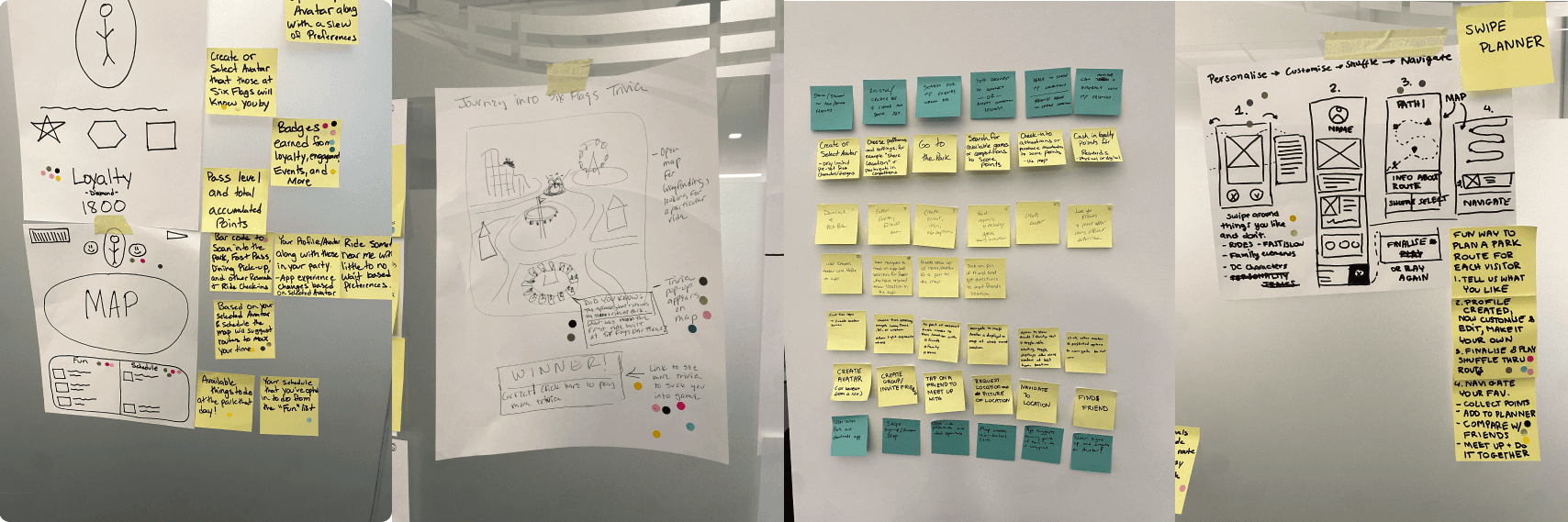
The team participated in a two-day intensive workshop to align on vision and generate solutions for the new app. Through collaborative exercises including journey mapping, feature brainstorming, and rapid ideation, we explored numerous approaches to enhancing the park experience. We then collectively evaluated and voted on the ideas that best aligned with user needs and project goals, establishing a clear, unified direction for the product.
Exploration & Wire Framing
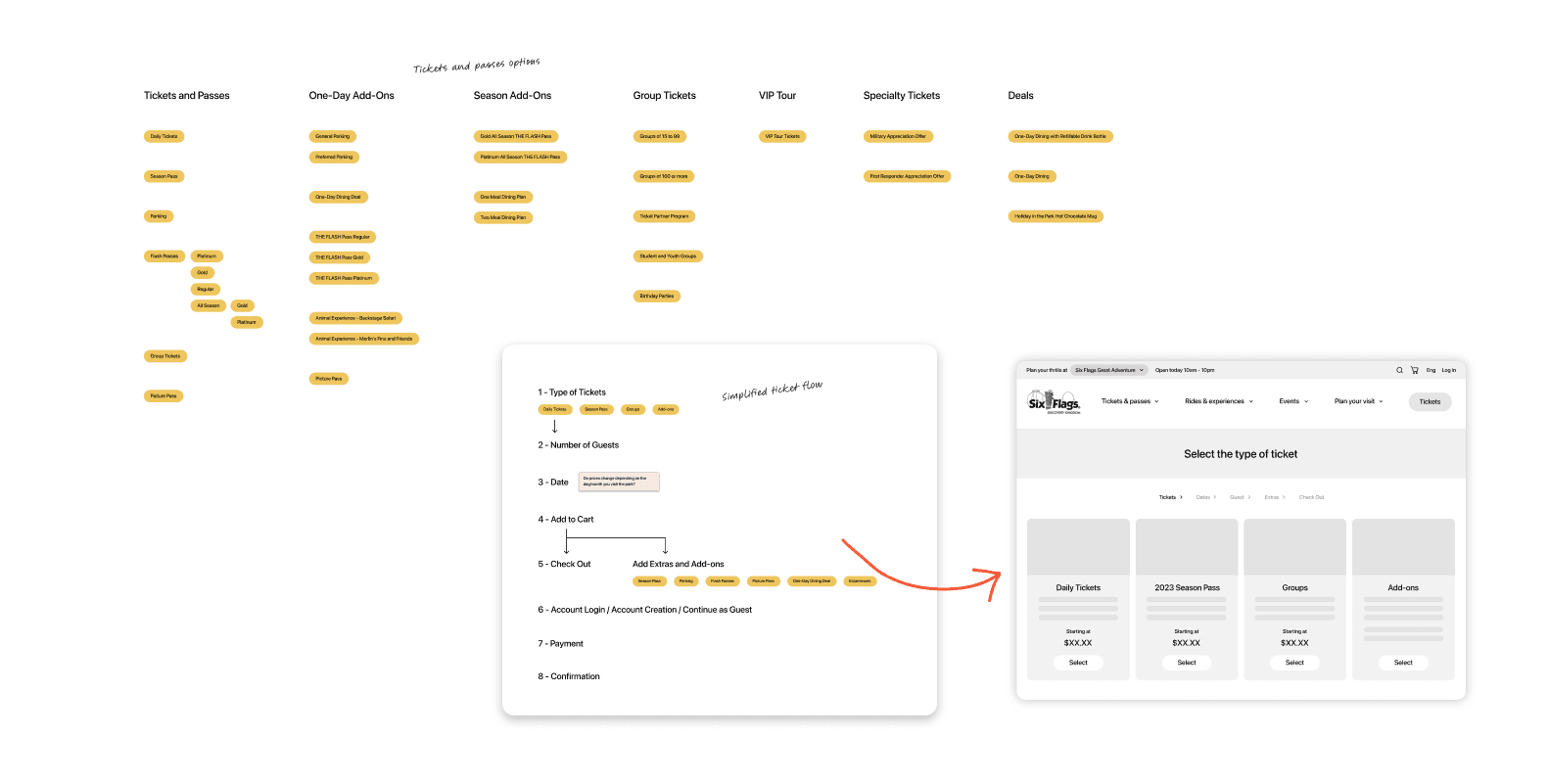
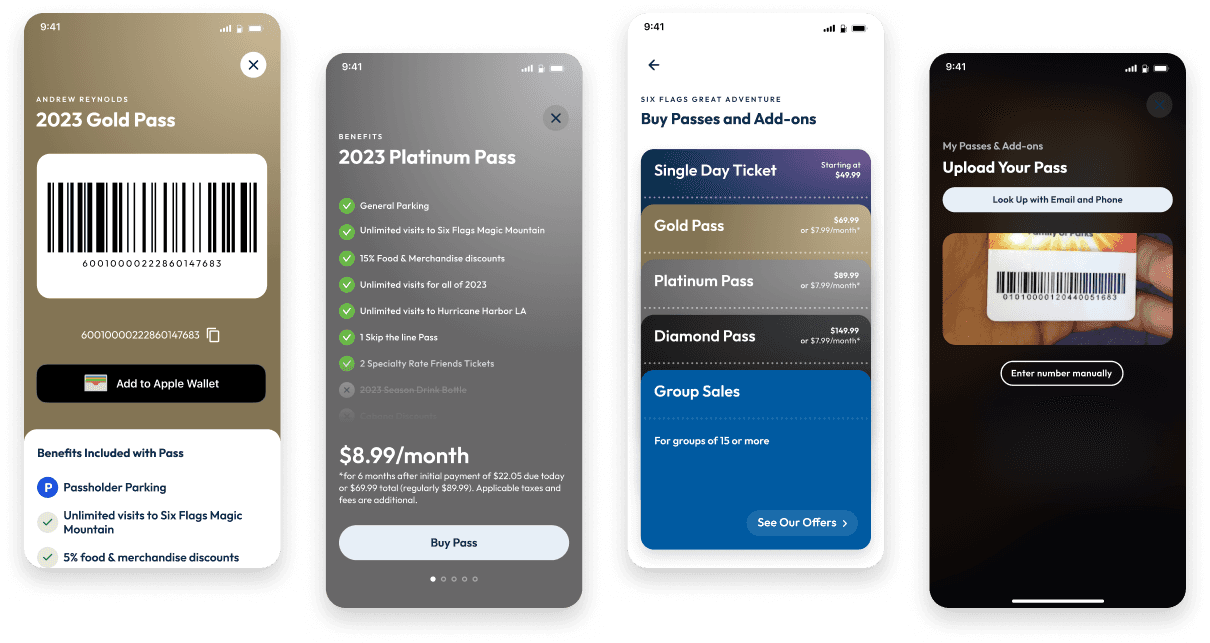
For each feature, we deconstructed existing functionality to its core elements, then rebuilt it with a focus on clarity and user-centricity. We prioritised the features that would most significantly improve the park experience: a streamlined ticketing and pass system, interactive park maps with real-time wayfinding, mobile food ordering to reduce wait times, and comprehensive ride information including live queue updates and attraction details.
Streamlining Food Ordering
The existing food ordering experience had several significant pain points that impacted the visitor experience. Guests had no way to see which restaurants were open, whether their dining pass was accepted at a particular location, or track their order once it was placed. We redesigned the flow to prioritise transparency and efficiency, surfacing restaurant status, dining pass compatibility, and real-time order tracking - transforming a frustrating process into a seamless part of the park visit.
Getting the dining experience right was essential, the last thing park visitors want is to waste precious time heading to a closed restaurant or waiting for an order that was never received. We introduced several improvements that transformed the food ordering flow. Quick filters allowed users to instantly find restaurants by cuisine type, while clear status indicators showed availability, dining pass acceptance, and current wait times at a glance. I introduced custom food-themed icons and subtle animations throughout the experience, adding moments of delight that made ordering feel less transactional and more aligned with the excitement of a theme park visit.
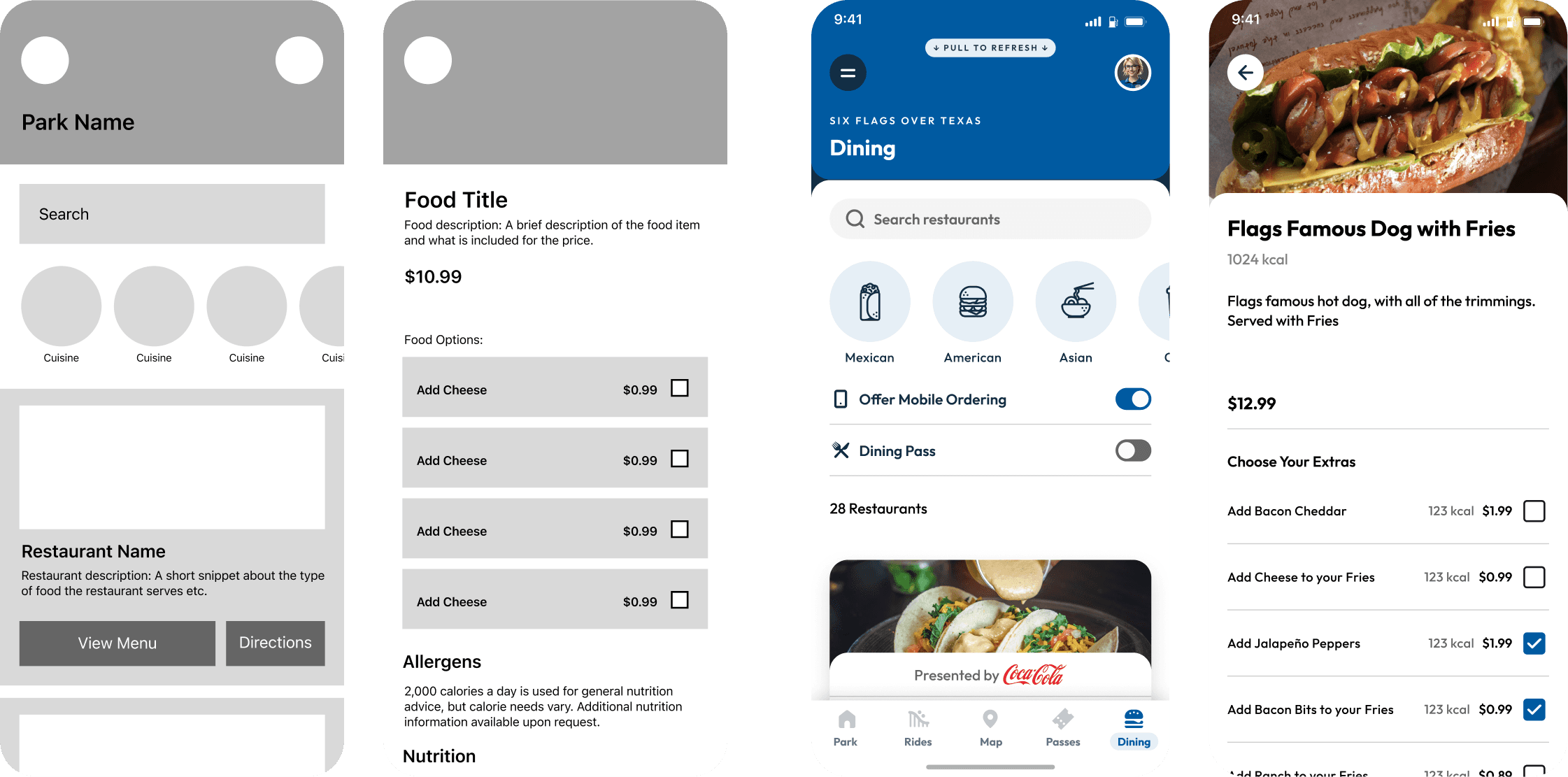
In addition to cuisine filters and search, we added several enhancements to the overall dining experience, including:
Restaurant open/closed status
Mobile ordering and dining pass filters
Menu section filter
Order status banner
Order push notifications
Customisation options, including free text input
Restaurant directions
Dining pass credits balance
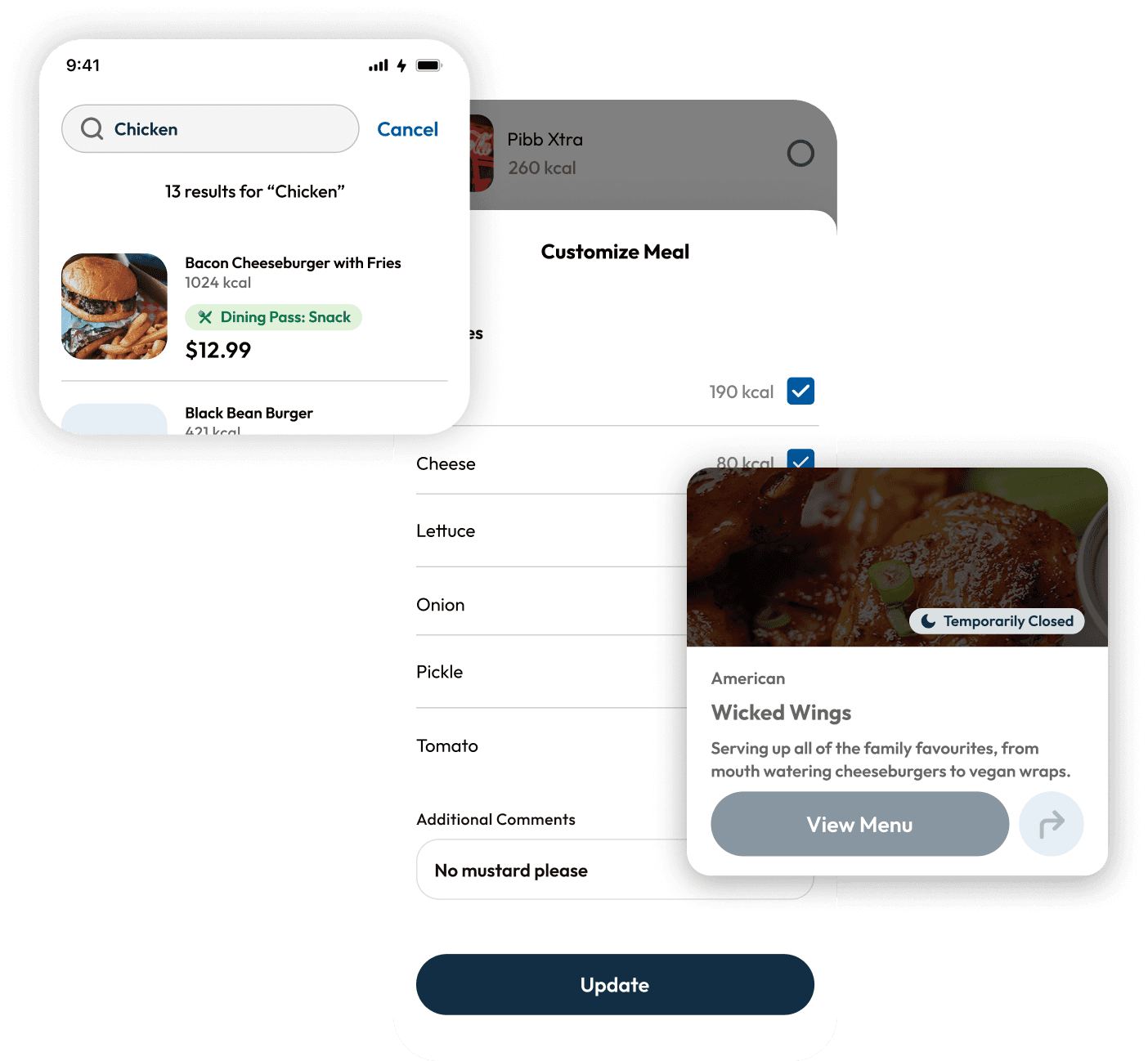
I took the opportunity to jump in to After Effects to create these fun dining filter animated icons.

Finding Your Next Thrill
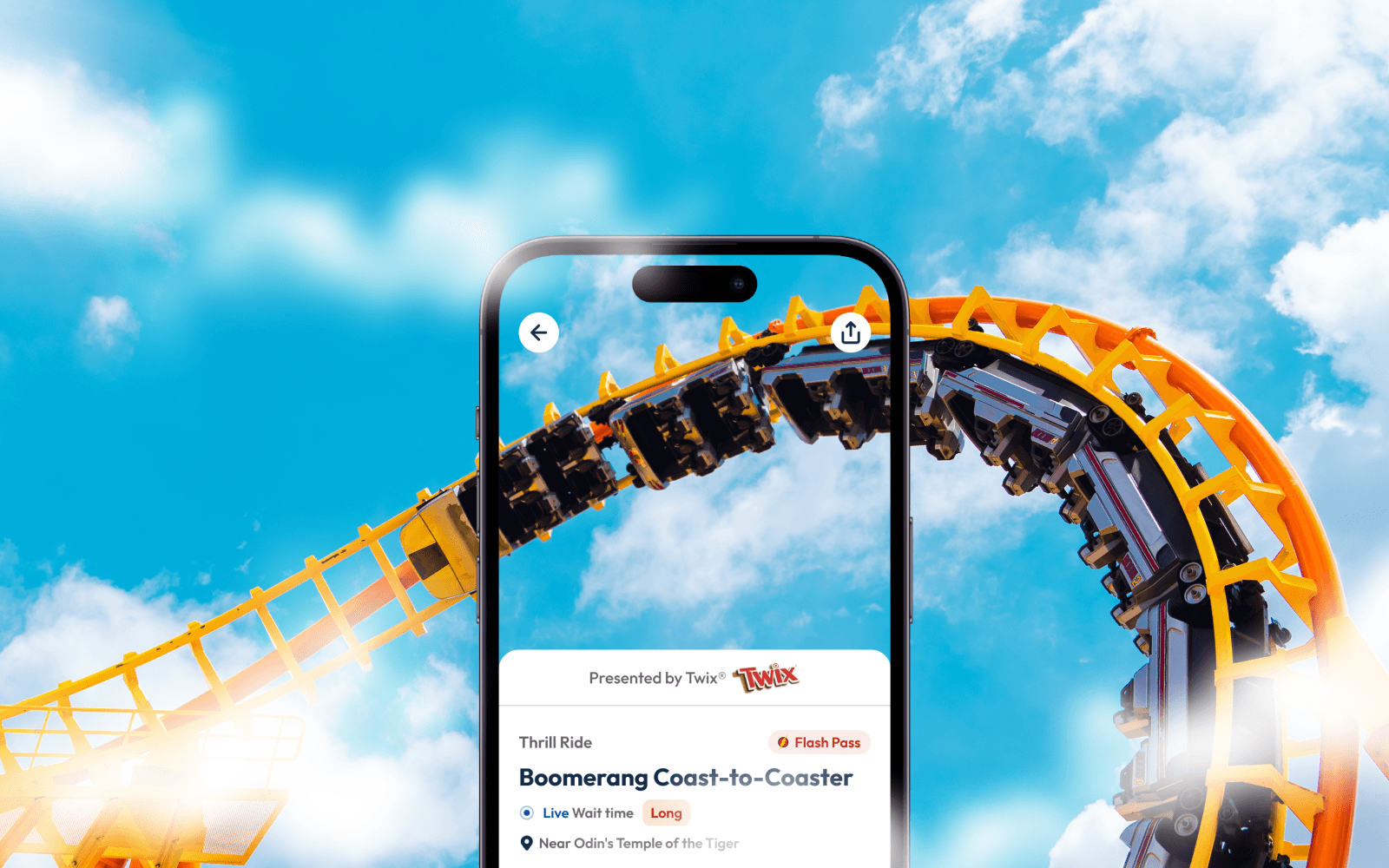
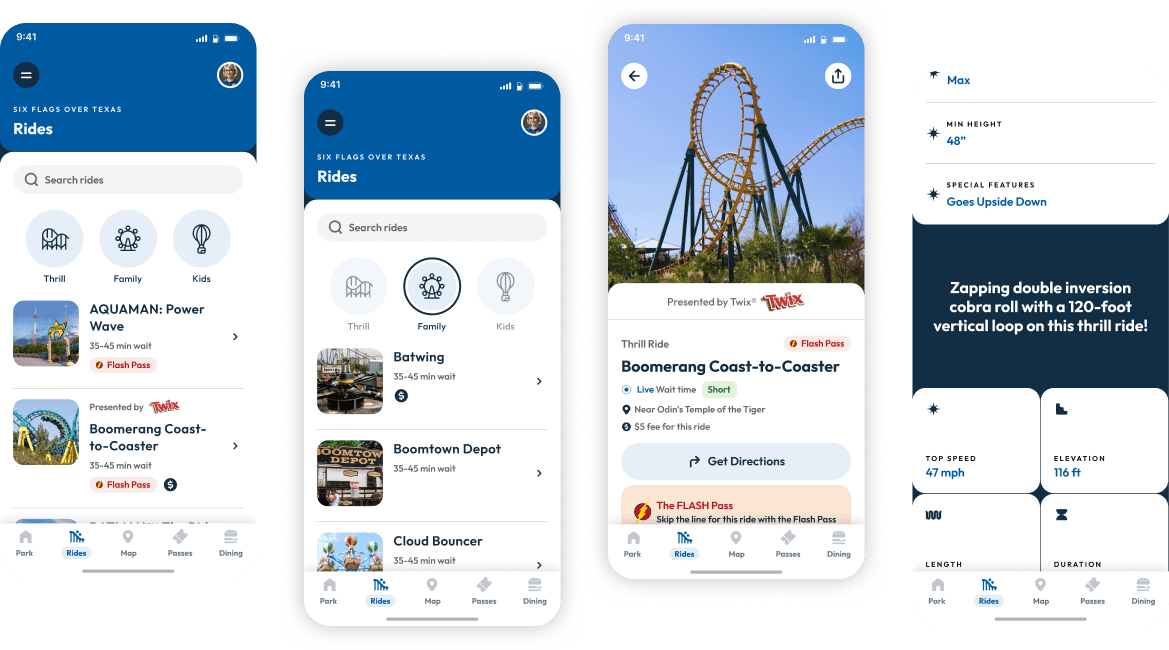
Rides are the heart of any Six Flags visit, so this feature needed to be both comprehensive and instantly useful. Displaying real-time wait times directly on the main view was one of the most well-received additions to the app, eliminating the need to wander around or check individual rides to plan efficiently. Quick filters allowed users to sort by thrill level, height requirements, or ride type, making it easy for families to find suitable attractions. Each ride page provided detailed information including descriptions, restrictions, accessibility options, and live queue status, empowering guests to maximise their time and make informed choices throughout their day.

From PDF to Wayfinding
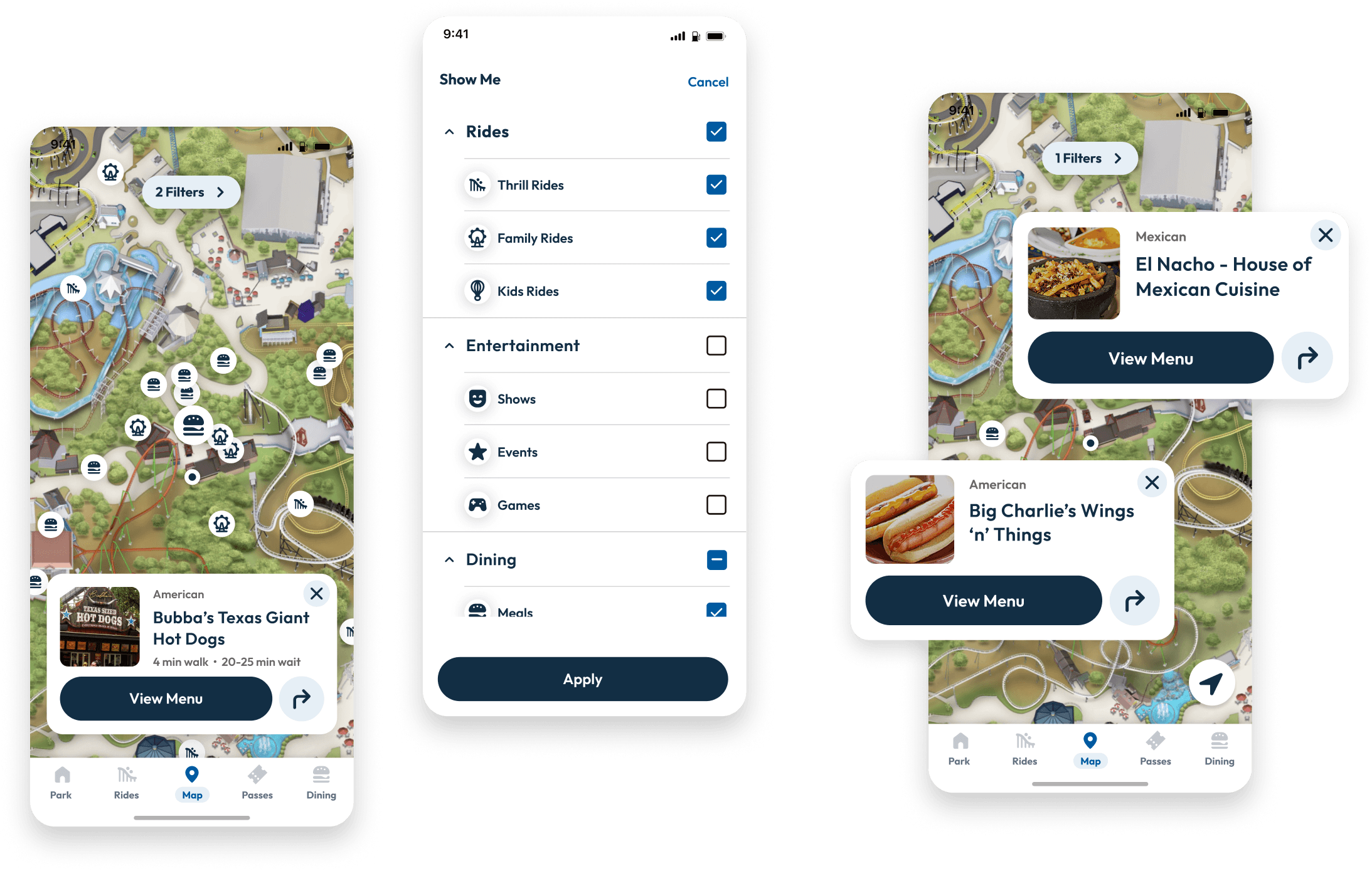
Replacing the static PDF map with an interactive, mobile-optimised solution was one of the app's most significant upgrades. Working within existing backend category constraints, we restructured the information architecture to be more intuitive and redesigned the entire icon system with fresh, scannable visuals that worked beautifully on mobile screens. The development team built in turn-by-turn directions with estimated walk times to every destination in the park, transforming navigation from a frustrating guessing game into an effortless experience. Finding the Dragon Coaster at Six Flags Texas now required just a few taps instead of deciphering a zoomed-in PDF.
Making Passes Clear and Accessible
Building for the Future
The V1 launch established a strong foundation, but it was just the beginning. The product roadmap includes exciting future additions: a comprehensive loyalty programme to reward repeat visitors, AR-powered treasure hunts that transform the park into an interactive playground, first-person POV ride previews to help guests choose their next thrill, and much more. Each planned feature builds on the core experience we created, ensuring the app continues to evolve and delight Six Flags visitors for years to come.